Ever dreamed of staying in a Georgian Country House, exploring a 1,000 acre loch-side Highland Estate, or soaking up the 300-year history of a Scottish Baronial Great House?
Stop dreaming, join us instead.
If you’ve ever wondered what it would be like to experience such rare and irreplaceable history, sign up today.
How this started
I found a castle for sale.
It was actually a Category A listed Scottish castellated Great House. Fourteen bedrooms. 5 estate cottages. Set in seventy acres in the Scottish Highlands with woodland, fields, formal gardens. Completed early in the 1700s it was the seat of an ancient Scottish clan and could boast three hundred years of continuous occupation. It was built on the site of an even more ancient, fortified structure, dating from the 1300's - the time of the Scottish Kings.
It was listed for sale at £3 million.
£3 million is, give or take, about half what you'd pay for a nice three bedroom freehold flat in Covent Garden, Marylebone, and maybe one quarter of what you’d have to pay to own a new waterfront apartment on Sydney Harbour.
The property had been on the market for several years but nobody was buying. The building had been in the same family’s hands for centuries but the current laird and lady owners had decamped for a smaller house on the estate.
I kept thinking: this can't be a problem of price, importance or inherent worth. People buy ordinary looking property in London every day for £3 million. The history of the building was surely enough to set it apart from the merely old and the scale of the building and estate lands enough to make it inherently valuable.
Then I realised, it's failure to sell was a math problem.
Finding one buyer with £3M to spend on a castle in the Scottish Highlands is harder these days than finding 30,000 people with £100 who dream of living in a Scottish castle. Instagram accounts and Facebook groups with followers interested in Scottish castles have millions and millions of followers.
Of course, coordinating people from all over the world to acquire a castle in Scotland is not without complications - and the regulatory burden is punishingly high. Like most things worth having, there is not a little effort required.
“The arithmetic is easy - if one buyer needs £3 million then thirty thousand only need £100 each.”
I started to conceive of a group that could, through membership, patronage, sponsorship, visitation and stays, combine its collective enthusiasm for authentic historic architecture with individually modest monetary contributions. In this way over time the group could hope to secure the futures of historic buildings of local, national or international importance.
I was not thinking of some massive public interest trust or competing with major international and national endowment funds - they can cost millions to establish and millions more each year to operate. At the time I was just thinking of letting friends and family know about it to see how far we could get.
Now I am suggesting a membership group that wants to save more than one castle, country house, manor or manse : members who hope to see ongoing use and enjoyment of many period buildings so they can be assured of an independent future.
A note from the founder
I'm a licensed real estate professional, born in the UK and based in Australia, with a lifelong interest in British architecture and history. During lockdown I found myself with time on my hands and a growing obsession with what I started seeing as the price-versus-value gap in some types of historic property - a gap between what these buildings had to be worth to the world, and what the market will pay for them.
We are so lucky to have the many examples of period architecture that we have - but we need to ensure those examples do not diminish. The inventory is finite and they are all irreplaceable. I want to see as much historic domestic architecture survive and thrive as possible. The National Trust cannot give every period property a lifeline and larger properties are just too much for most single family owners no matter how well off they are. Many times it is a single family that has owned for decades, some centuries, and they simply cannot shoulder the burden unassisted any longer. A different approach is required.
I started to consider how large my friend, family, colleague and associate group was, and to my amazement within a few degrees of separation I could count a few thousands. It helped that I’d worked for a very large firm in recent years - that helped bump my numbers up. I did some research and uncovered a Stanford academic’s insights from the early 1970’s which I believe indicates memberships might be the most natural owners of these large historic estates. Memberships can take more risks than individuals. Each individual member’s financial commitment may be limited to a relatively modest membership fee, but the organisation’s combined membership income can become significant enough to make a real impact. Memberships can also support large and complex projects by accessing the combined capabilities of members - and the expertise of people known to them. An individual might be able to reach 50 people for help, a membership of 30,000 could reach a pool of 1M or more.
Memberships also provide a source of demand. A group of 30,000 members where only 1/10 of members (3,000) stay at a single supported property for just one week once every 5 years and the economic impact is still material. Add members’ close friend and family group, and their colleagues and business associates - maybe 30 connections per member (all of whom will have their own connections) - and we start being able to activate potentially transformational economic power towards beneficiary properties.
Members bring the sort of fuel and engagement that can give large historic domestic buildings and estates a use that assures them an independent future.
Some members will be happy being guests, visitors or just part of the social cheer squad. Others will want to apply their knowledge or give of their time to play a more active role. A Membership can accommodate many tiers of participation around a single shared interest.
The reason for this site is to start assembling a group around a single simple shared interest. A group who are interested in preserving and experiencing historic properties. A group that has members that can reach out to activate wider interest and enthusiasm for historic country houses, castles and estates, among friends, colleagues, business associates, and family too.
A membership can’t help every period estate but the goal is to form a large enough group who are interested in access, use, preservation, sustainability and legacy, to ensure more historic properties thrive, and so survive for another 300 years.
You can call it charity if you like - but is it really charity if you’re enjoying it?
Beautiful arithmetic
Small contributions.
Extraordinary outcomes.
The National Trust has millions of members. It protects many large and complex properties set in beautiful landscapes, with important collections of great art, literature, and period crafts. There are however thousands of period buildings The Trust cannot help. If the truth be told, not every historic house needs to be a museum.
Buildings that are not under the Trust’s care can still be locally, nationally and even internationally important. Unlisted buildings can be no less ancient or interesting for the people who lived in them, as survivors of a long ago age, and all have their own stories to tell.
The belief that informs the creation of this Membership is that to survive and thrive historic buildings need to be used - they need a use. They're big enough to accommodate far more than the current occupants. They need an engaged community of interest, and individually small contributions from members, that together result in genuine collective muscle. Sometimes, they’ll need new owners but short of ownership there is still much a group can achieve.
I don’t see the membership as charity - I see it as self-interest with socially helpful outcomes. Truth be told, I want to stay in and enjoy historically significant properties as much as the next member. I’d love to wander around a large amenity estate with its meadows, moorland, forests and parkland. I want to preserve and conserve, improve efficiency and self-sufficiency, and introduce new ways and new people to these living treasures - so they keep living. I think I’d also like the feeling that comes from knowing I did something to make that come about.
We think there's a way to do something genuinely useful - and enjoy doing it in the process.
30,000
Members
×
£100
PER YEAR
=
£3M
EVERY YEAR
Whatever amount people can afford for membership, the point is that when added together they can become amounts that can make a real impact.
The membership
Just the beginning.
There's no way of telling whether 3, 30 or 30,000 people will be interested.
But membership could mean…
01
Access & Adventures
Private visits. Members-only access and experiences.
Stays and Events.
Celebrations.
02
Collective Patronage
Monies directed to heritage properties at risk of break-up or alteration that diminishes them.
Through properly regulated channels, patronage could for some members create an interest in ownership of a period property.
03
A Community of Obsessives
People who find a Scottish Baronial or Georgian, Regency, Victorian or Edwardian country house as interesting as you do.
04
Something Worth Telling, about Something Worth Doing.
Is this you?
This club could be for people who…
Would rather spend a weekend at a Georgian country estate than the latest urban hotspot in a repurposed office building.
Value the work of the charitable trusts, but understand charity alone simply cannot help everything worth preserving.
Might live anywhere in the world but feel drawn to or attached to British history and its built heritage.
Want membership to be a part of something that means something.
I want people who have chosen to belong. To assemble properties where members can meet, celebrate, stay and play - with friends, family, colleagues and business associates - and those we’ve yet to meet.
I want to know members are visiting and staying at those properties we’ve been able to support, or simply offering their friends, family and other connections the chance to do so - to ensure this unique and special built heritage thrives.
✦ ✦ ✦
The world we're talking about
Castles. Manor Houses. Estates.
Each one a reminder of
what's out there.
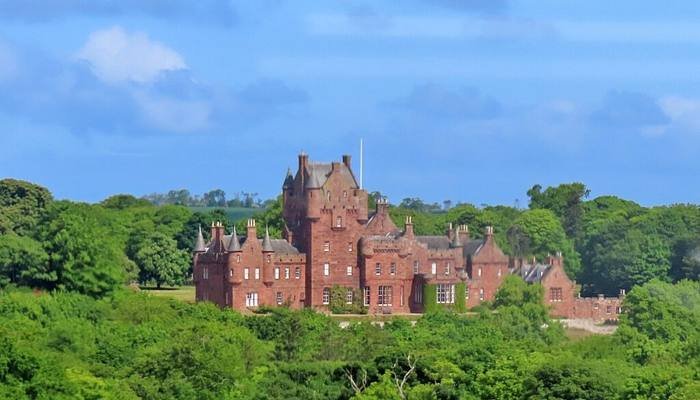
Ayton Castle, Scottish Borders - owned by TV personality Alan Carr. We wish Mr Carr well as Laird of Ayton Castle.
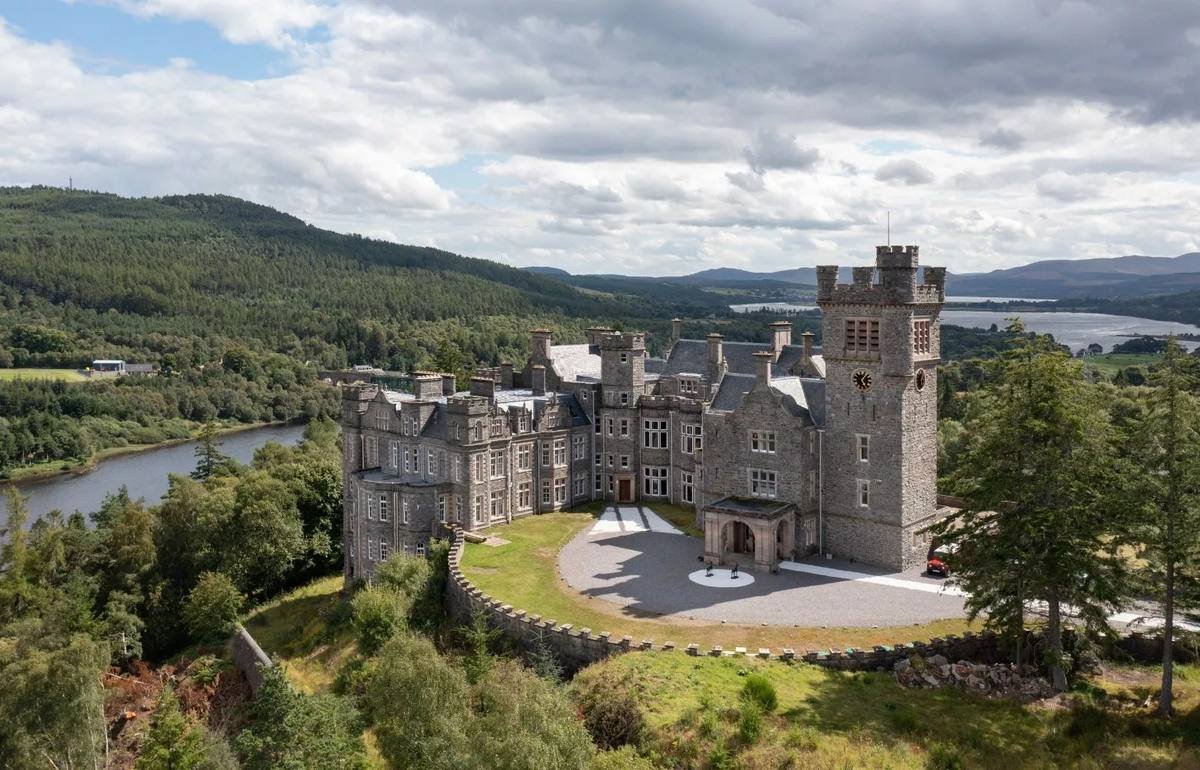
Carbisdale Castle, Ardgay - owned by Lady Carbisdale (aka Samantha Kane, Barrister-at-Law). Recently renovated and sometimes for sale.
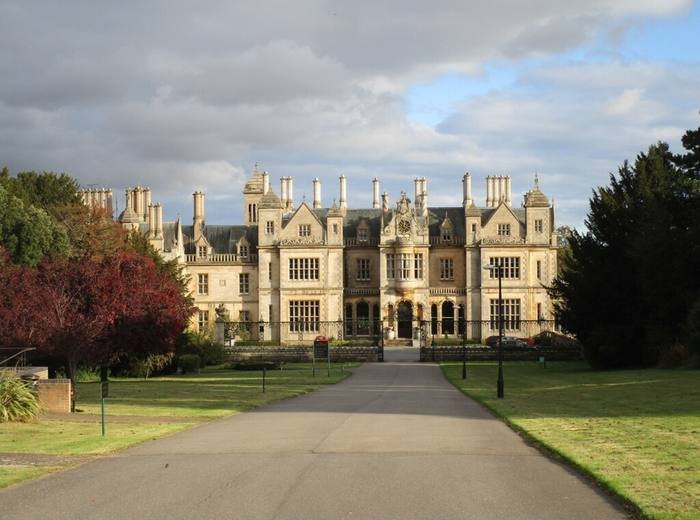
Stoke Rochford Hall, Lincolnshire - recently acquired on a 999 year lease by historic property specialists, The Timeless Collection.
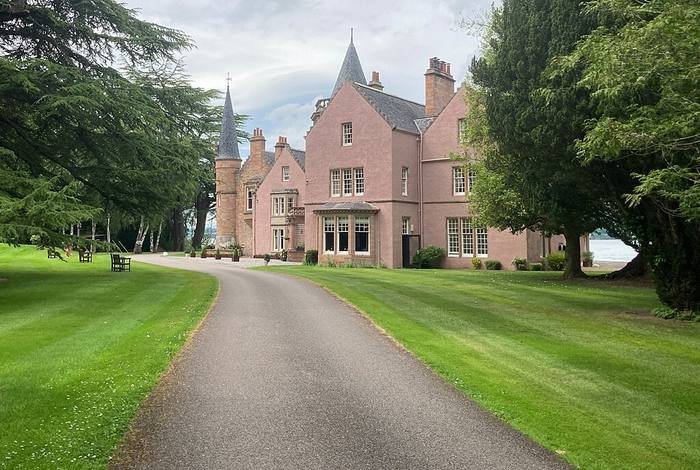
Bunchrew House - 16th-century Scottish baronial mansion on the Beauly Firth. Famously acquired by John Forbes of Clan Forbes in 1673. 16 bedrooms/suites just 3 miles from Inverness.
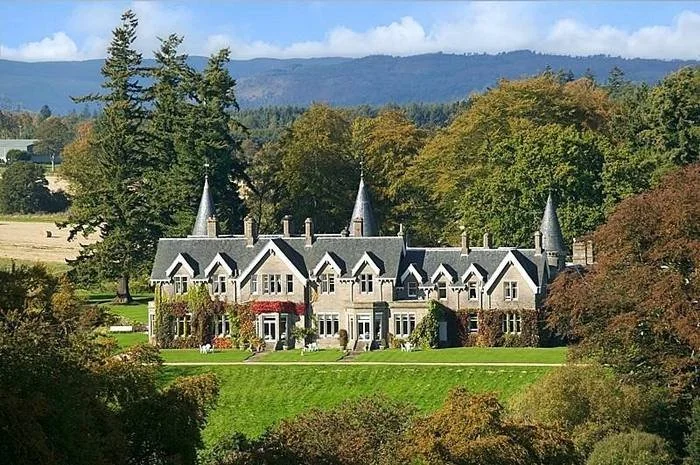
Ballathie House, Perthshire - set on the River Tay in 200+ acres, not far from Perth. Said to be a favourite of The Prince of Wales (later Edward VIII). The Grand Duke Michael of Russia and the Duke of Westminster both were visitors to Ballathie.
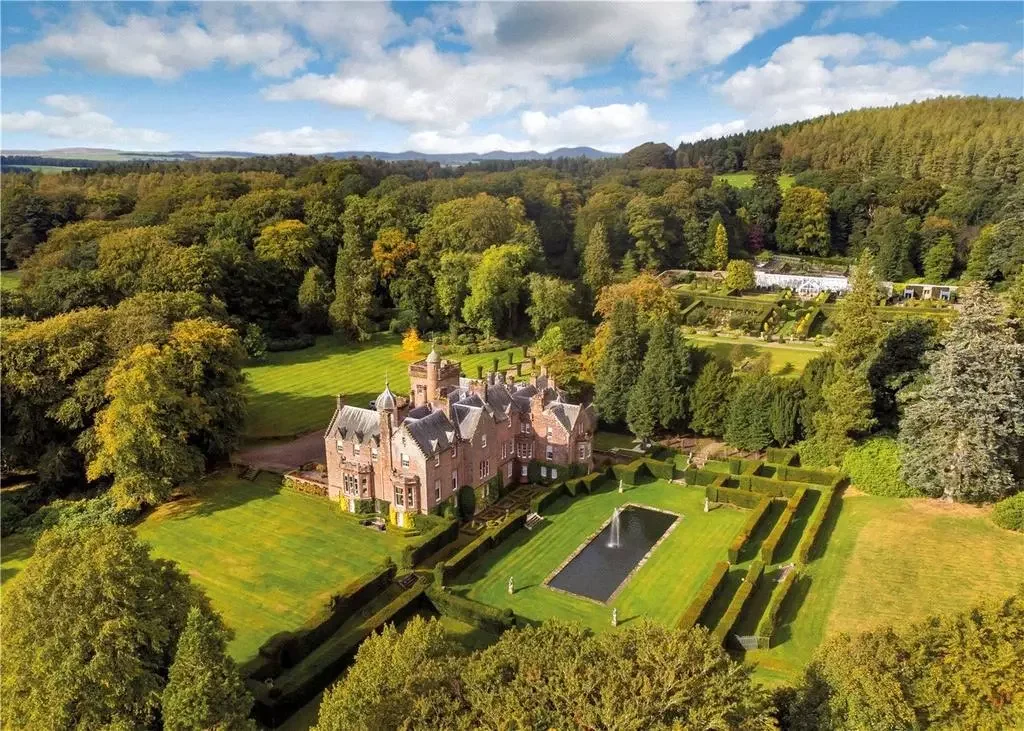
Portmore Estate, Peebles - A listed baronial mansion house with 10 bedrooms and a further 7 estate cottages, Victorian walled garden, reservoir with fishing chalet, mature parkland - set in almost 3,500 acres just 45 minutes by car from Edinburgh.
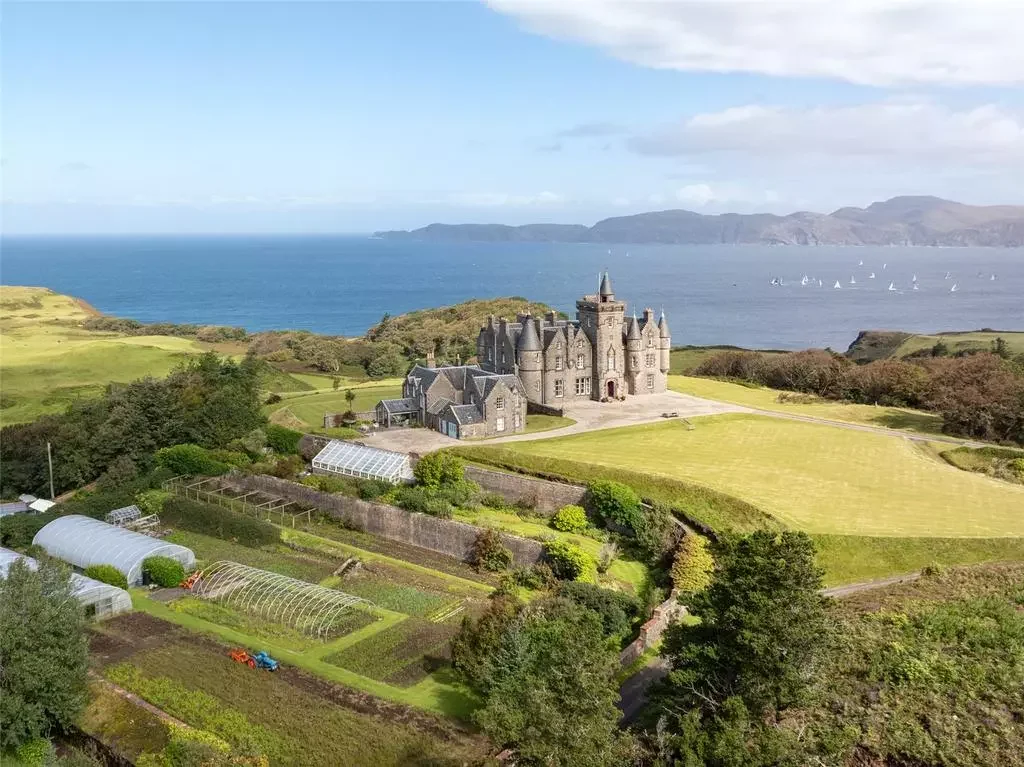
Glengorm, Tobermory - a Baronial castle, 18 bedrooms and a further 17 rental properties, a cafe, a working farm - and 3,700 acres on the Isle of Mull. For sale right now.
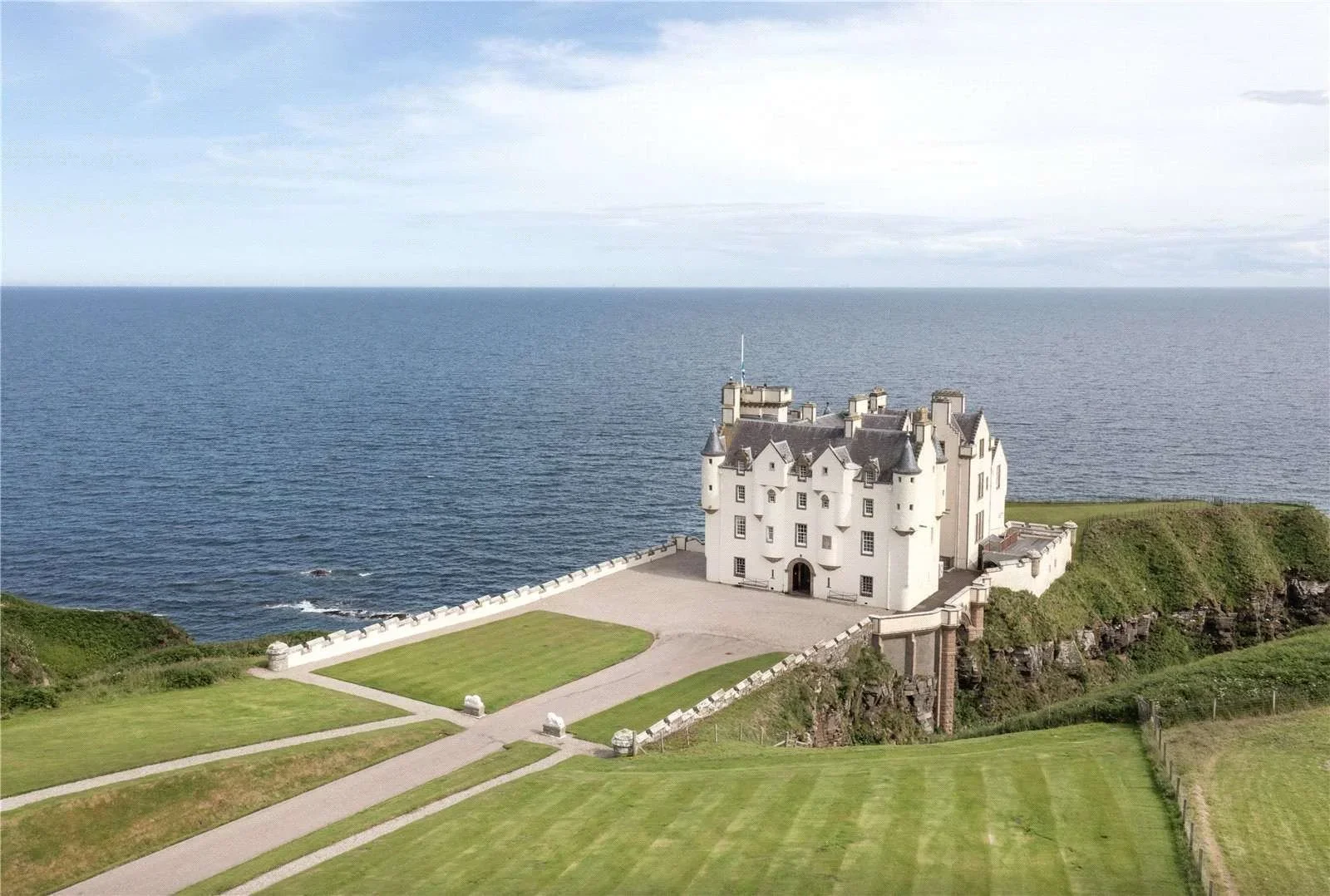
Dunbeath Castle - a 15th-century cliff-top castle, 13 bedrooms, a further 20 estate houses, 4 miles of coastline - and 28,500 acres. For sale in 2024 at an asking price roughly equivalent to 1,000 per acre.
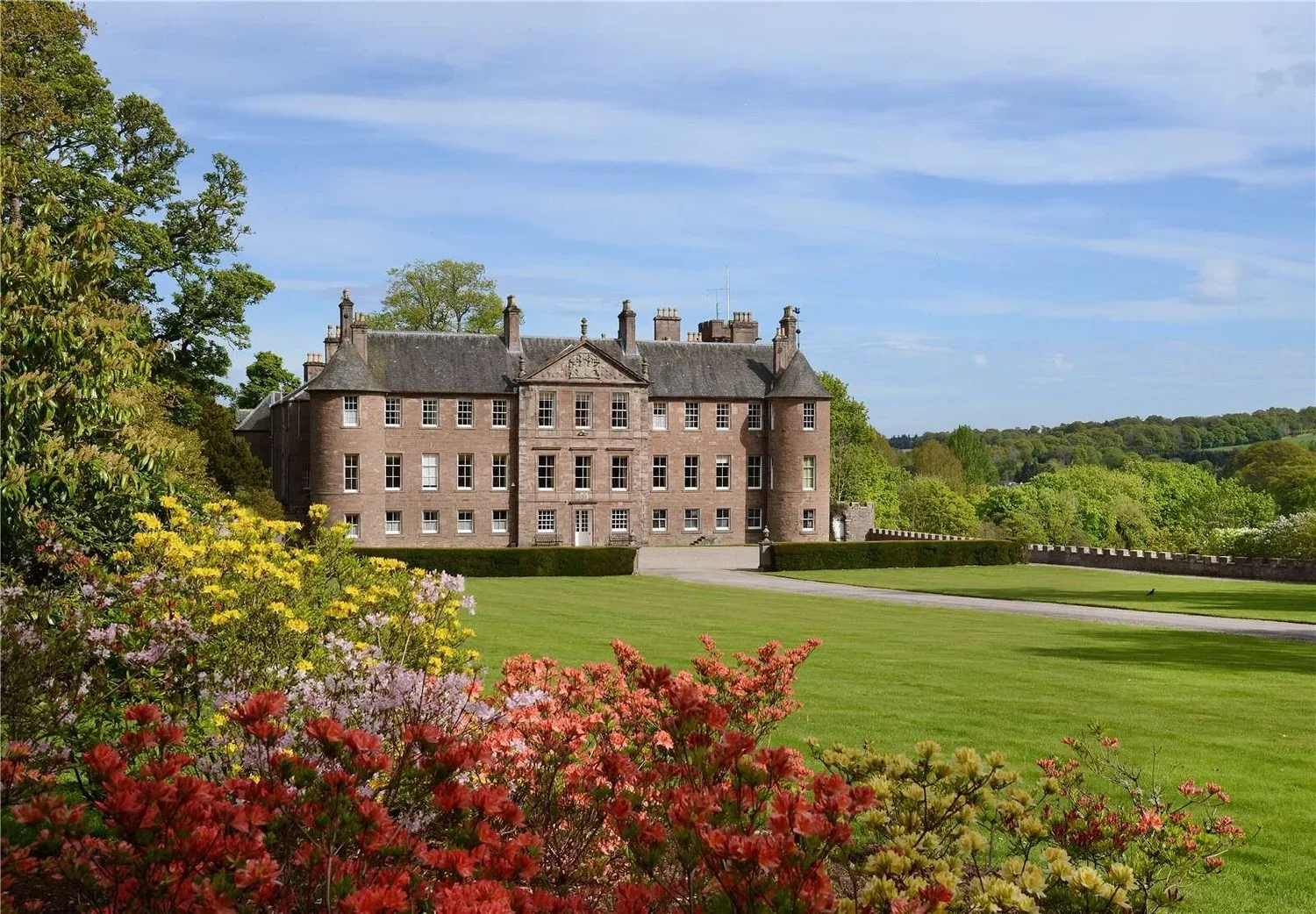
Brechin Castle - Seat of Clan Ramsay and until recently home of Lord and Lady Dallhousie. A-Listed Building and Gardens. They don't come much more authentic.
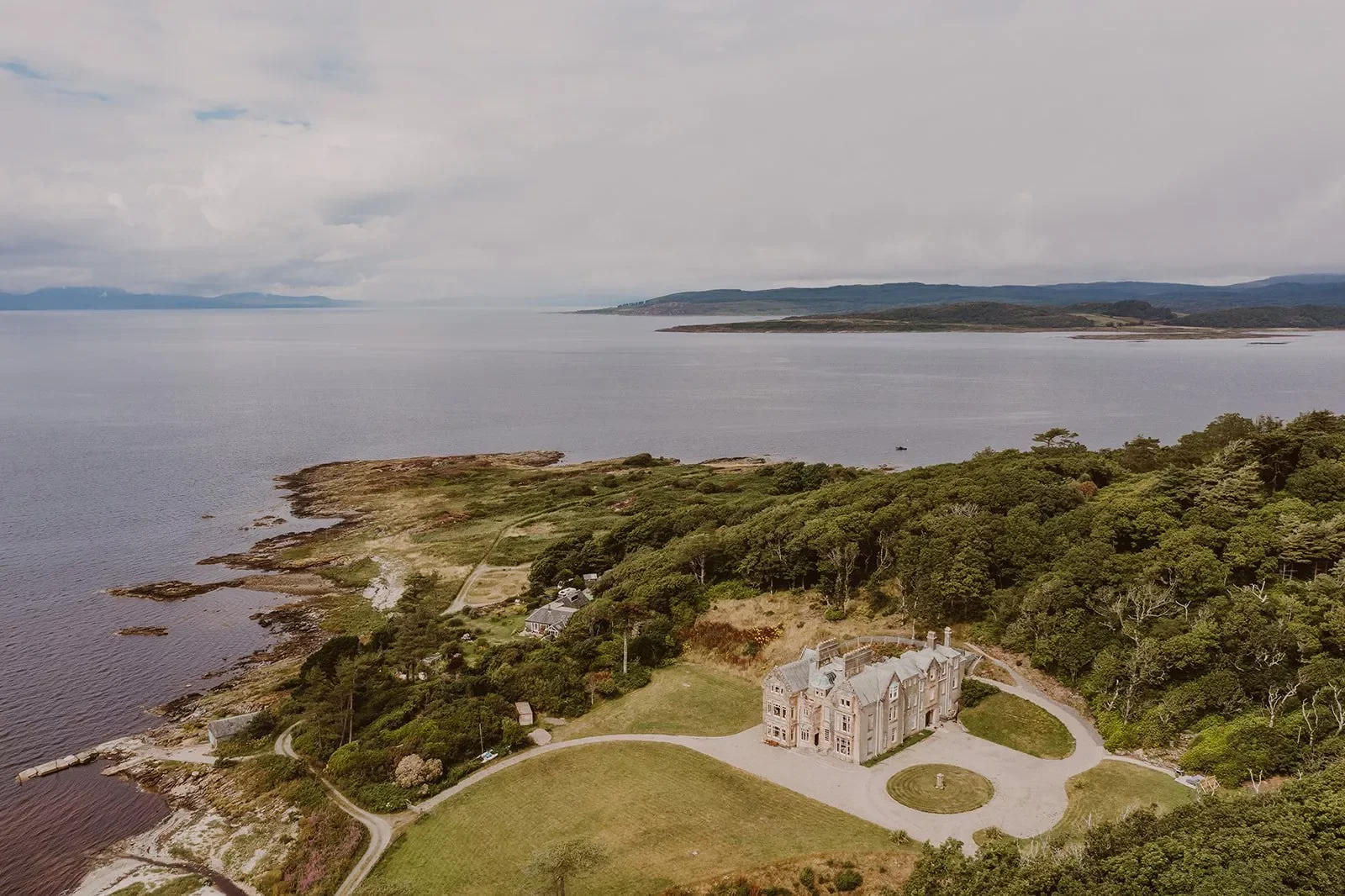
Ronachan House - not every property needs to be a castle to be important or lovely. B-listed with views west to Islay, Jura and Gigha this lovely Victorian building is set in 10 coastal acres.
Copyright in the above images belongs to their owners. these images are presented here to illustrate certain arguments made in this website. inclusion of these images does not and is not intended to infer an affiliation of any type with the copyright owners or the owners of the subject properties.
Be first through
the gate.
We're assembling the waitlist for the Founding Group now.
We'll keep you posted. No spam. Unsubscribe any time.